Life at Agape
Activities & Daily Life
In a home with six residents, activities aren't a posted calendar everyone is marched through. They're planned around who lives here — what each person enjoys, what they're still able to do, and how they're feeling that particular morning. Here's what that actually looks like day to day.
What We Do Together
Our wide range of social and physical activities are tailored to each resident's interests, abilities, and personality.
Live Music & Entertainment
Scheduled weekly music time featuring favorite classics and requests, including timeless songs like Frank Sinatra.
Arts & Crafts
Creative drawing sessions, coloring activities, and art projects that stimulate the mind and bring joy to each resident.
Social Activities
Group gatherings, conversation circles, and personalized social programs designed to keep everyone connected and engaged.
Wellness & Relaxation
Gentle massage, relaxing music therapy, and personalized wellness routines that promote physical and emotional well-being.
Birthday Celebrations
Every resident's birthday is celebrated with love and care, making each milestone feel truly special and memorable.
Personalized Daily Routines
Flexible mornings, preferred mealtimes, and custom activity schedules — because every resident is unique.
The Rhythm of a Day at Agape
Days are structured but never rigid. A predictable rhythm helps everyone — especially residents living with dementia — feel oriented and settled, while the details flex to match energy and mood.
A consistent start and breakfast together
Residents wake at a familiar time and share a home-cooked breakfast at the same table. Starting the day the same way each day does a lot of quiet work — it orients everyone before anything else is asked of them.
Gentle movement, music, or conversation
Chair exercises to keep joints and balance working, favourite music, or reminiscence conversation — looking at old photographs and talking about careers, hometowns, and family. For residents with memory loss, long-term memories are often the most vivid and the most enjoyable to revisit.
Lunch, then a genuine rest
The main home-cooked meal of the day, followed by quiet time. Rest is part of the plan, not a gap in it — an over-scheduled afternoon is how agitation and exhaustion start.
Arts, garden time, or one-on-one attention
Drawing and colouring, a craft project, time outside in the garden, or simply sitting with a caregiver. This is also when live music sessions happen during the week, and when scheduled appointments and family visits usually land.
A calm dinner and an unhurried wind-down
Dinner together, then a deliberately quiet evening — relaxing music, a favourite programme, a back rub. Late-day confusion is common in dementia, so evenings stay low-stimulation and predictable rather than busy.
A guide, not a timetable. If someone is enjoying the garden or deep in conversation, that takes priority over whatever came next.
How We Adapt Activities as Needs Change
An activity only works if the person can take part in it and enjoy it. As abilities change, the activity changes — not the resident's right to be included.
When someone can no longer follow a group activity
We shift to one-on-one. Sitting together with music, hand massage, or looking through a photo album gives the same connection and sensory engagement without the demand of keeping up with a group.
When mobility becomes limited
Activities come to the resident rather than the other way round. Seated exercises, tabletop crafts, and moving a chair out to the garden mean limited mobility doesn't turn into sitting alone in a room.
When words become difficult
Music and touch keep working long after conversation gets hard. Familiar songs from someone's youth often reach them when nothing else does, and singing along frequently survives when speech has otherwise faded.
When someone simply isn't interested
That's allowed. Nobody is pushed into an activity to fill a slot. We offer, we come back later, and we pay attention to what a refusal is actually telling us — pain, tiredness, or plain preference.
Photo Gallery
Real moments from daily life at Agape Assisted Living.
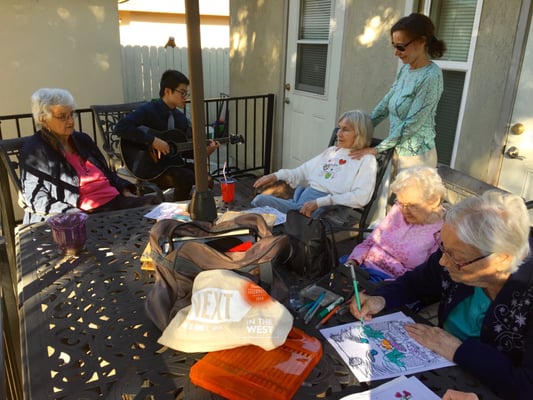
Back rub massage and relaxing music
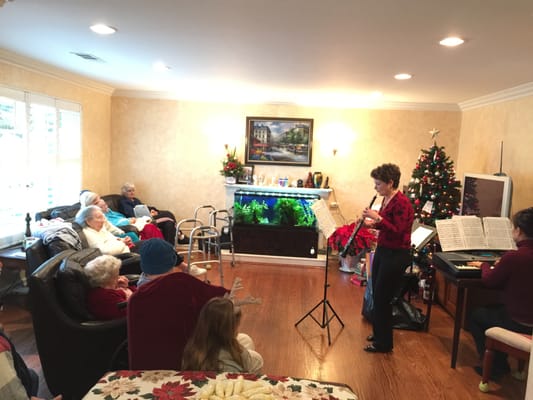
Enjoying music together

Putting in a request for Sinatra
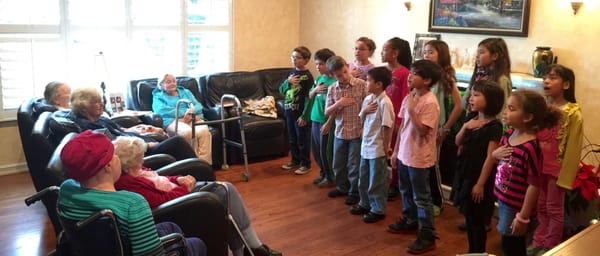
Music and entertainment together
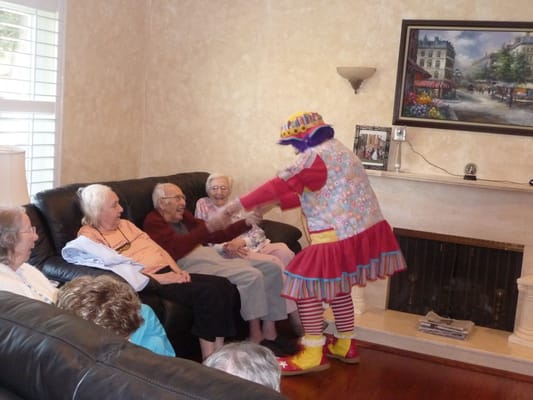
Let's dance!

Andy's birthday celebration
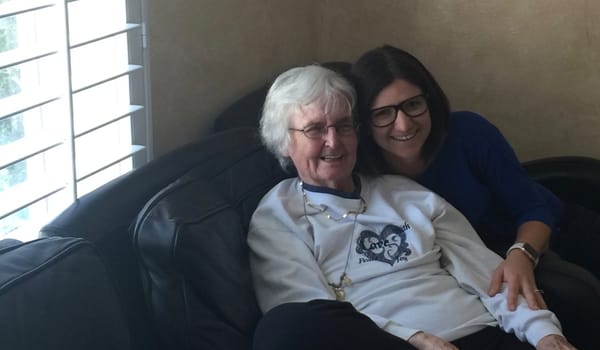
Smiling and laughing together
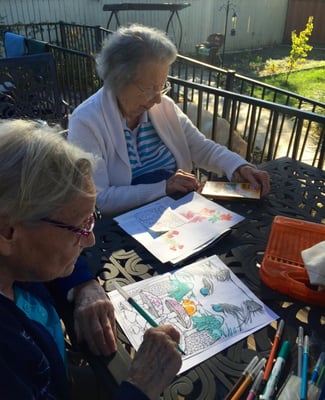
Residents drawing and being creative
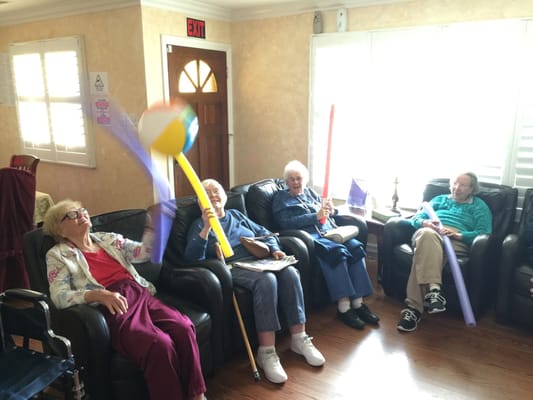
Group activities and fun
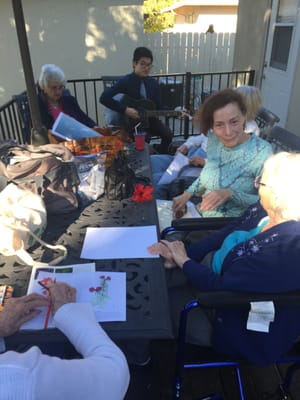
Drawing and listening to live music
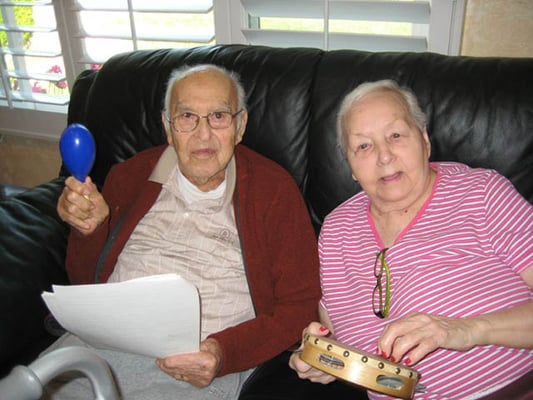
Making music together

Thumbs up! Life is good at Agape
Questions Families Ask About Activities
How often do activities happen at Agape?
Something happens every day. There is a consistent daily rhythm — morning movement or music, afternoon crafts, garden time, or one-on-one engagement — plus live music sessions during the week and a celebration for every resident's birthday. Because we care for only six residents, activities are arranged around the group rather than run to a fixed institutional timetable.
Do you offer activities for residents with dementia or Alzheimer's?
Yes, and they are central to how we structure the day. Predictable routines, reminiscence conversation, music therapy, sensory activities, and gentle exercise are all used specifically because they help residents with memory loss feel oriented and calm. Activities are adapted as cognition changes so residents stay included at every stage.
What happens if my parent doesn't want to join in?
Nobody is forced to participate. We offer, we try again later, and we treat a consistent refusal as information — it often signals pain, fatigue, or that the activity is no longer the right fit. Quiet company is a legitimate way to spend an afternoon.
Can families join in activities or celebrations?
Please do. Families are welcome during visiting hours — Monday to Friday 10:00 AM to 6:00 PM, and Saturday and Sunday 10:00 AM to 5:00 PM — and birthdays and holidays are much better with family there.
Do residents get outside?
Yes. We have a garden, and time outdoors is part of the normal afternoon rather than a special occasion. For residents who can't walk out independently, we bring a chair out so they still get fresh air and daylight.
Come See It for Yourself
We'd love to give you a tour so you can experience the warmth of Agape firsthand. Call us or send a message — we're here to help.